


Price: $1,199.00
(as of Aug 19, 2026 05:16:00 UTC – Details)

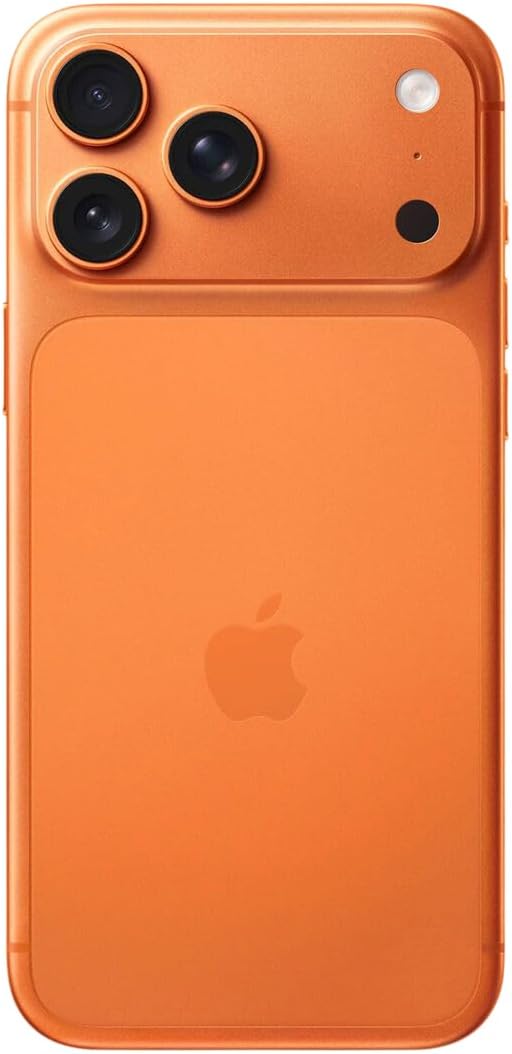
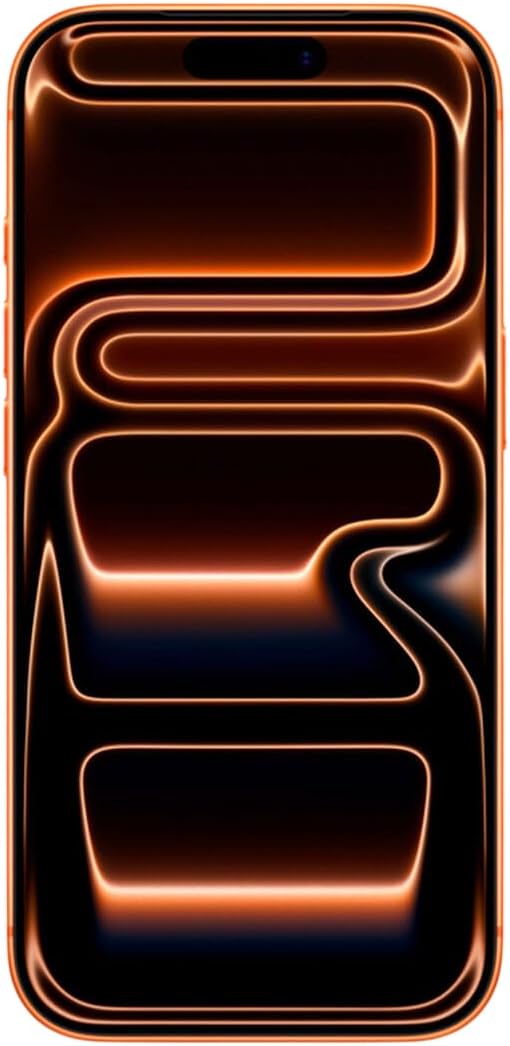
Apple iPhone 17 Pro Max (US Version, 256GB, Cosmic Orange) Renewed: A Comprehensive Analysis of the Unlocked Offering
Navigating the market for premium smartphones often presents a dichotomy: pay a premium for a factory-sealed unit, or navigate the nuanced landscape of renewed devices to extract maximum value. The offering for the Apple iPhone 17 Pro Max, US Version, 256GB, eSIM, Cosmic Orange – Unlocked (Renewed) sits squarely in the latter category, presenting a specific proposition that warrants close examination. Based solely on the product specifications and listing details provided, this analysis dissects the tangible value drivers, the operational realities of the “Renewed” classification, the network flexibility afforded by the unlocked status, and the logistical considerations of the included accessories and activation process.
The Proposition: Flagship Tier in a Distinctive Finish
At the core of this listing is the hardware identifier: the iPhone 17 Pro Max with 256GB of internal storage. In the current hierarchy of mobile technology, the “Pro Max” designation signifies the apex of the lineup—typically commanding the largest display real estate, the most advanced camera array, and the highest battery capacity available in the generation. The selection of 256GB storage represents a critical “sweet spot” for the power user. It alleviates the anxiety of the base 128GB tier—which can fill rapidly with ProRAW photography, 4K ProRes video capture, and large local media libraries—while avoiding the diminishing returns or higher cost-per-gigabyte of the 512GB or 1TB tiers.
Aesthetically, the Cosmic Orange finish is a significant differentiator. Moving away from the traditional graphite, silver, gold, and sierra blue/blue titanium palettes, a vibrant orange hue suggests a design language focused on individuality and visibility. For a device that lives in the hand and on the desk for years, the colorway transforms the device from a mere utility into a personal statement. However, prospective buyers should note that the “Renewed” status means the specific vibrancy and finish integrity of this specific color are subject to the refurbishment grading process, a factor explored later.
Network Freedom: The Unlocked Advantage
The single most compelling functional feature described in the listing is the Unlocked status, explicitly defined as compatible with both GSM and CDMA networks. This dual-compatibility is the gold standard for device portability in the United States.
The listing enumerates a comprehensive list of supported carriers: AT&T, T-Mobile, Sprint (legacy/network integration), Verizon, US Cellular, Cricket, Metro, Tracfone, and Mint Mobile. This breadth confirms that the device is not merely “SIM unlocked” in a theoretical sense but possesses the necessary radio firmware and band support to operate on the two fundamentally different network architectures historically used in the US.
Strategic Implications for the Buyer:
- Carrier Agnosticism: The buyer is not locked into a 24 or 36-month installment plan or a specific postpaid contract. They can migrate to an MVNO (Mobile Virtual Network Operator) like Mint Mobile or Cricket for significantly lower monthly rates immediately upon activation.
- International Travel: For the global traveler, an unlocked US-version iPhone supporting both GSM and CDMA is invaluable. It allows for the simple purchase of a local physical SIM card (or eSIM profile) upon landing in Europe, Asia, or South America, avoiding exorbitant international roaming fees.
- Resale Value Retention: Unlocked devices command a premium on the secondary market. Should the owner upgrade in two years, the lack of a carrier lock expands the buyer pool globally, rather than restricting it to customers of a single carrier.
The listing prudently advises: “Please check with your carrier to verify compatibility.” This is a standard due diligence disclaimer. While the hardware supports the bands, specific carrier features—such as 5G mmWave access, C-band prioritization, or Wi-Fi Calling provisioning—can occasionally depend on the carrier’s whitelisting of the specific device IMEI in their database.
The eSIM Architecture: US Version Specifics
The title explicitly notes “eSIM” and “US Version.” This is a critical technical distinction. Since the iPhone 14 series (US models), Apple has removed the physical SIM tray entirely in favor of dual eSIM support. This listing confirms the iPhone 17 Pro Max continues this trajectory.
Operational Impact:
- Activation Workflow: The listing outlines the precise activation sequence: “Insert a SIM card from a compatible carrier. Then, turn it on, connect to Wi-Fi, and follow the on screen prompts to activate service.” This instruction seems slightly contradictory for a US Version eSIM-only device (which lacks a physical SIM tray), suggesting the instruction is a generic template or refers to the carrier-provided SIM logic (e.g., converting a physical SIM to eSIM via carrier app/QR code). The buyer must be prepared for a fully digital provisioning process—scanning a QR code from the carrier or using “Quick Transfer” from an old iPhone.
- Dual SIM Utility: The device supports dual active eSIMs. This allows the user to maintain a personal line and a business line, or a domestic line and an international travel line, simultaneously without physical swapping.
- Security: eSIM cannot be physically removed if the phone is stolen, adding a layer of security for tracking (Find My) and preventing unauthorized carrier switching.
The “Renewed” Classification: Condition, Battery, and Grading
The term “Renewed” is the pivot point of the value proposition. Unlike “Used” or “Refurbished” (which can imply varying standards), “Renewed” on major marketplaces typically implies a rigorous, multi-point inspection process performed by qualified suppliers or the platform itself.
Cosmetic Condition:
While the provided description does not explicitly grade the cosmetic condition (e.g., “Excellent,” “Good,” “Acceptable”), the industry standard for “Renewed” generally implies:
- Screen: No visible scratches when the screen is on. Hairline scratches visible only when off/under direct light may be permissible.
- Body/Frame: Minimal signs of wear. For the Cosmic Orange finish—a likely anodized or PVD-coated titanium/aluminum frame—this is crucial. Scratches on colored finishes are often more visible than on neutral tones. The refurbishment process may involve polishing the frame, but deep gouges are typically outside “Renewed” allowances.
Battery Health Guarantee:
The listing provides a concrete, quantitative metric: “Tested for battery health and guaranteed to have a minimum battery capacity of 80%.”
This is the single most important hardware health metric for a lithium-ion device.
- Context: Apple defines “Normal Battery Health” as 80%+ maximum capacity. A guarantee of 80% minimum ensures the device meets the manufacturer’s threshold for “optimal performance” without throttling (Performance Management).
- Real World Usage: At 80% health, a Pro Max unit (which typically features the largest battery in the lineup) should still comfortably deliver a full day of mixed use for the average user. However, heavy users (gaming, 5G tethering, video recording) should calibrate expectations: 80% of a 4,400mAh+ cell is roughly 3,500mAh effective capacity.
- Longevity: The battery is chemically aged. While it meets the current threshold, it will degrade faster than a brand-new cell (0 cycles). The buyer is effectively purchasing a device that may require a battery replacement ($99+ via Apple) sooner than a new unit—potentially within 12–18 months depending on usage intensity.
The Accessory Ecosystem: What’s In (And Out of) the Box
The unboxing experience of a renewed device differs fundamentally from retail. The listing is transparent about the Bill of Materials (BOM):
Excluded:
- Headphones (EarPods): Apple ceased including wired EarPods in the box several generations ago (environmental initiative). Their absence here is standard for the model year, not a penalty of the renewed status.
- SIM Card: Expected. The carrier provides this (or the eSIM QR code).
- Original Apple Packaging/Documentation: Renewed units typically ship in generic white/brown “frustration-free” packaging.
Included:
- “Generic (MFi Certified) Charger and Charging Cable.”
- MFi Certification (Made for iPhone): This is a critical quality assurance marker. Non-MFi cables can trigger “Accessory Not Supported” errors, charge slowly, or in worst-case scenarios, damage the U2/IC charge management chip on the logic board. The explicit mention of MFi certification protects the buyer from the cheap, uncertified cables often found in third-party refurbisher kits.
- Wattage Ambiguity: The description says “charger” (singular) but does not specify wattage (20W, 30W, etc.). The iPhone 17 Pro Max likely supports 27W–30W+ fast charging (USB-PD). A generic 5W or 12W brick will charge the device significantly slower (3+ hours vs ~90 mins). The buyer should budget for a high-wattage Apple or Anker/Belkin GaN charger if the included unit is low-wattage.
- Cable Type: Likely USB-C to Lightning or USB-C to USB-C (depending on the port transition timeline of the “17” generation). MFi certification ensures data transfer and fast charging handshake integrity.
Activation and First-Boot Experience
The listing provides a concise Standard Operating Procedure (SOP) for the first boot:
- Insert SIM (or initiate eSIM transfer).
- Power On.
- Connect to Wi-Fi.
- Follow on-screen prompts.
This describes the standard Setup Assistant flow. For a renewed device, there are specific checkpoints the buyer should execute during this flow to validate the “Renewed” promise:
- Hello Screen & Language: Standard.
- Quick Start: Use an old iPhone to transfer Apple ID, Wi-Fi passwords, and—critically—eSIM profiles.
- Face ID Setup: Validates the TrueDepth camera system integrity (often a failure point in poor refurbishments).
- Battery Health Check: Immediately navigate to Settings > Battery > Battery Health & Charging. Verify the “Maximum Capacity” reads ≥ 80%. If it reads 79% or lower, the device fails the listing’s explicit guarantee and should be returned immediately.
- Parts & Service History: Settings > General > About. Check for “Unknown Part” warnings (Screen, Battery, Camera). A quality “Renewed” process uses genuine Apple parts or calibrates aftermarket parts correctly to avoid these warnings.
- Carrier Lock Check: Settings > General > About > Carrier Lock. Must read “No SIM Restrictions.” This validates the “Unlocked” claim definitively.
Financial and Warranty Considerations
While the prompt does not specify price or warranty duration, the “Renewed” category inherently carries a different risk profile than “New.”
- Price Delta: The discount over MSRP (likely $1,199+ for 256GB Pro Max) must be substantial—typically 15–25%—to justify the loss of the 1-Year Apple Limited Warranty, the 90-day complimentary support, and the “zero-cycle” battery.
- Seller Warranty: Major platforms (Amazon Renewed, Back Market, etc.) typically offer a 90-day to 1-year supplier warranty. The buyer must verify who honors the warranty (the marketplace vs. the third-party seller) and the process for claims (DOA, battery failure, modem failure).
- AppleCare+ Eligibility: In many regions, a renewed device purchased from an authorized reseller may be eligible for AppleCare+ purchase within 60 days (requiring a diagnostic at an Apple Store). This is a high-value mitigation strategy for the buyer, effectively resetting the hardware safety net.
The Cosmic Orange Variable
The color Cosmic Orange introduces a unique variable in the renewed market.
- Frame Durability: Colored anodization on aluminum or PVD coating on titanium shows wear differently than raw metal. The “Renewed” grading must account for the frame edges (antenna bands, button recesses) where coating wears thin.
- Screen/Back Glass: If the back glass is cracked and replaced during refurbishment, the color match of the adhesive/glass must be perfect. Aftermarket back glass on rare colors often suffers from hue shift or incorrect regulatory markings etching.
- Accessory Matching: Finding a matching orange silicone/leather case from Apple (or high-quality third parties) extends the aesthetic cohesion.
Conclusion: A Calculated Entry Point to the Pro Max Tier
Based strictly on the provided product title and description, the Apple iPhone 17 Pro Max, US Version, 256GB, eSIM, Cosmic Orange – Unlocked (Renewed) represents a high-value, high-agency purchase option for the informed buyer.
The Strengths are Structural:
- True Carrier Freedom: Full GSM/CDMA unlocked status on a US eSIM-only model offers maximum flexibility for MVNO hopping and international travel.
- Quantified Battery Assurance: The explicit ≥80% guarantee removes the biggest “blind buy” risk.
- Safe Charging Baseline: MFi Certified accessories prevent the accessory-damage lottery common in grey-market refurbs.
- Storage Adequacy: 256GB is the rational minimum for a “Pro” workflow.
The Risks are Inherent to the Category:
- Cosmetic Lottery: The specific grade of the Cosmic Orange finish is undefined in the text.
- Battery Trajectory: Starting at 80% means the replacement cycle is accelerated.
- Charger Wattage: The included generic brick is likely the weak link in the daily experience.
- Warranty Gap: Reliance on seller/platform warranty vs. Apple’s direct support.
Final Verdict:
This SKU is ideally suited for the technically competent buyer who understands eSIM provisioning, knows how to verify Battery Health and Carrier Lock status in the Settings menu immediately upon receipt, and already owns (or is willing to buy) a high-wattage USB-C PD charger. For this buyer, the unlocked 256GB Pro Max in a distinctive Cosmic Orange finish offers a flagship experience at a significantly reduced capital outlay, provided the “Renewed” cosmetic grade meets their personal standard upon physical inspection. The listing provides the necessary transparency on the critical functional pillars—Network, Battery, Accessories—leaving the cosmetic verification as the final step in the buyer’s due diligence.